From Refunds to Revenue: Rethinking Returns in eCommerce
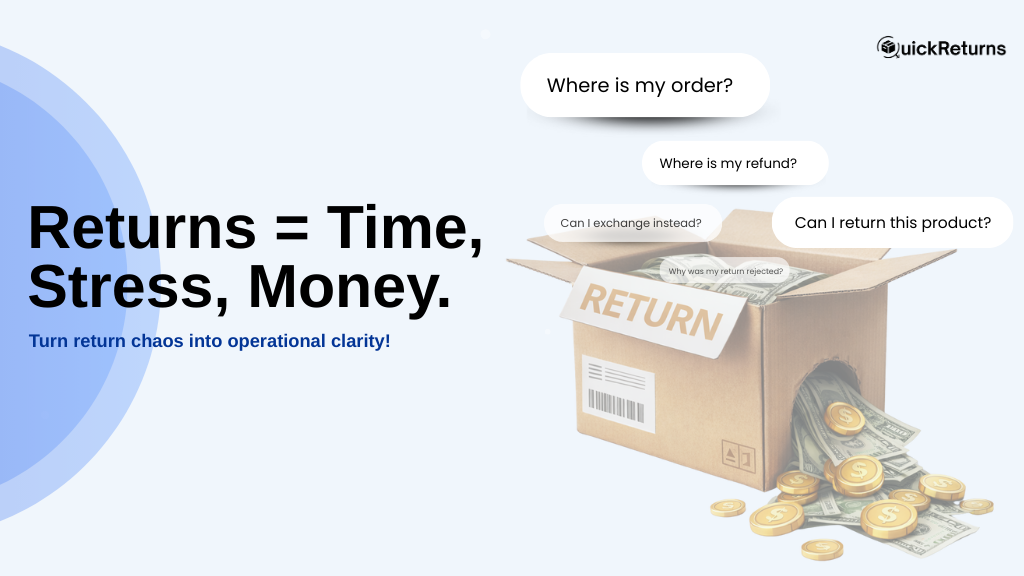
Why Exchange-First Return Flows Are Replacing Refund-First Models in eCommerce
Returns are an unavoidable part of eCommerce. As online shopping continues to grow, so do customer expectations around flexibility, convenience, and post-purchase experience.
Traditionally, most brands have relied on refund-first return flows—a model where the primary goal is to process refunds quickly and close the transaction. While this approach may appear customer-friendly, it often leads to revenue leakage, operational inefficiencies, and missed retention opportunities.
Increasingly, brands are rethinking this approach. Instead of treating returns as the end of a transaction, they are designing exchange-first return flows that aim to retain customer intent, reduce refunds, and improve overall unit economics.
This article explores how exchange-first return strategies work, why they are becoming important across eCommerce categories, and how modern return systems enable this shift.
Returns Are a Structural Challenge in eCommerce
Returns are not limited to any single category. They affect almost every type of online business:
Apparel and footwear face size and fit issues
Beauty and personal care products depend heavily on preference
Lifestyle and home products often fall short of expectations
Accessories and gadgets are frequently exchanged rather than rejected
In many of these cases, the return is not driven by dissatisfaction with the brand itself. Instead, customers are looking for a better match, not an exit.
Refund-first systems do not differentiate between these scenarios. They assume every return represents lost demand, even when customer intent is still present.
The Limitations of Refund-First Return Flows
Refund-first return processes are simple to operate, but they come with hidden costs:
Loss of original order value
Payment gateway and refund processing fees
Reverse logistics and warehouse handling
Increased customer support queries
Delayed inventory availability
Reduced lifetime value (LTV)
Most importantly, a refund resets the customer journey. The brand must spend again on marketing to bring the customer back, even though the customer was already engaged.
As customer acquisition costs (CAC) continue to rise, this model becomes increasingly inefficient.
What Exchange-First Return Flows Do Differently
Exchange-first return flows do not remove refunds. They reframe the decision journey.
Instead of asking customers what they want to do, these flows are designed to help customers arrive at a better outcome — both for themselves and the brand.
This typically means:
Encouraging exchanges before refunds
Showing relevant alternatives instead of blank choices
Making exchanges feel easier, faster, and more valuable
- Offering discounts to lure that customer
The key difference lies in how choices are presented, not whether choices exist. This approach respects customer choice while prioritizing outcomes that preserve revenue and engagement.
Understanding Customer Behaviour During Returns
When customers initiate a return, they are usually in one of three states:
Adjustment – Customers who want a slight modification (size, color, variant)
“I want this, but slightly different.”Exploration –Customers open to similar or better alternatives
“Maybe something similar would work”Exit – Customers who want to exit the purchase entirely
“I’m done, I want my money back”
Most refund-first systems treat all three states the same, resulting in unnecessary revenue loss.
Exchange-first flows are designed to address the first two groups effectively, where demand still exists.
Designing Exchange-First Journeys Customers Actually Choose
Simply offering an exchange option is not enough.
What matters is how intelligently the exchange is positioned.
Instead of presenting a flat list of actions like “Refund” or “Exchange,” modern return journeys often:
Automatically suggest the same product in a different size or color
Surface similar products aligned with the customer’s original selection
Highlight best-selling alternatives within the same category
Show availability and delivery timelines upfront
Clearly explain next steps and outcomes.
By reducing cognitive load and guiding customers toward relevant alternatives, brands make exchanges feel like a natural continuation — not a compromise.
Product Discovery Inside Returns
Returns are one of the few moments where customers are:
Actively engaged
Already inside the brand ecosystem
Open to reconsidering options
Smart brands use this moment to re-introduce product discovery — not aggressively, but thoughtfully.
For example:
Showing a better-reviewed alternative
Highlighting a popular upgrade
Recommending a frequently exchanged-to product
When done carefully, this does not feel like upselling. Instead, it helps customers find a product that better meets their needs while keeping them within the brand ecosystem.
Why Incentives Work Best Inside Return Flows
Incentives are often associated with acquisition or conversion, but they can be equally powerful post-purchase.
In exchange-first systems, incentives are used selectively to:
Encourage exchanges over refunds
Offset price differences
Make store credits more appealing
Reward customers for staying within the brand ecosystem
The key is subtlety.
Rather than blocking refunds, well-designed systems simply make exchanges more attractive:
Faster resolution
Additional value
Fewer steps
Clear outcomes
The goal is not to block refunds, but to make exchanges more appealing and logical for customers who are already open to alternatives. When customers understand what they gain, many choose exchanges voluntarily.
The Missing Layer: Intelligence Inside Return Journeys
What differentiates basic exchange options from effective exchange-first strategies is the presence of decision logic inside the return flow.
Modern return systems often consider:
Customer behavior patterns
Order value and product category
Inventory availability
Price differences and discount eligibility
Operational feasibility
This allows the system to present only relevant and viable options to customers, improving success rates and reducing errors.
This type of logic is sometimes described as a revenue-retention layer within returns. Platforms such as QuickReturns implement this approach through systems like ConvertX, which focuses on guiding customers toward exchanges, alternatives, or credits when appropriate.
Why Smart Execution Matters for Exchanges
Even the best-designed exchange flows fail if execution is weak.
Customers quickly lose trust when:
Suggested products are unavailable
Pricing adjustments are unclear
Discounts are not carried forward
Logistics timelines change unexpectedly
To avoid this, successful brands rely on smart exchange systems that:
Validate inventory before showing options
Calculate price differences instantly
Apply discount rules correctly
Coordinate reverse and forward logistics automatically
This ensures exchanges are reliable, predictable, and scalable. Solutions like Smart Exchange within QuickReturns are built to handle this operational complexity behind the scenes.
Operational Benefits Beyond Revenue
Exchange-first return flows also simplify operations.
Brands adopting these strategies often see:
Fewer support tickets related to refunds
Reduced manual intervention
Faster resolution times
Better visibility into return performance
Over time, this improves operational efficiency and allows teams to scale without proportional increases in support or logistics costs.
Exchange-First Returns Across Markets
In markets like India, where COD, RTOs, and logistics variability add complexity, exchange-first strategies become even more valuable.
Customers often prefer:
Replacements over refunds
Faster resolution over cash reversal
Clarity over flexibility
When designed with local realities in mind, exchange-first flows:
Reduce RTO losses
Improve customer trust
Increase repeat purchase likelihood
The principle remains the same — preserve intent, reduce friction, and communicate clearly.
The Role of Return & Exchange Platforms
Building exchange-first systems internally is complex.
It requires:
Product design
Inventory integration
Pricing logic
Logistics orchestration
Analytics and reporting
This is why many brands rely on dedicated return and exchange platforms to power their post-purchase experience.
Such platforms act as an orchestration layer — handling complexity in the background while brands focus on growth.
A best return and exchange platform, built specifically to help brands move from refund-centric workflows to revenue-retentive return strategies, without compromising customer experience.
Returns as a Revenue Lever
Returns will always be part of eCommerce. The question is not how to eliminate them, but how to manage them intelligently.
Exchange-first return flows allow brands to:
Retain revenue
Improve customer experience
Reduce operational overhead
Increase long-term customer value
As competition increases and margins tighten, rethinking returns is no longer optional. It is becoming a key part of sustainable eCommerce growth.